Sunday, February 26, 2012
What You Think
For starters, this week, I feel I should point out that few of you took to heart Chris Foster's challenge from last week:
"My challenge to you for this week (if you haven’t already done so) is to come up with an outline of what topics you expect your paper to cover and in what level of detail."
More generally, the majority of those who posted did a nice job of posting links to recent reading relevant to their topic. These links are an important window for your professors and your classmates.
They are not, however, particularly helpful as to the contents of your own thoughts about what you have been reading and researching.
A pattern discernible in class has been that, when queried in person, each of you has interesting and crucial comments to make about the reasoning and worries behind your chosen topic.
On the blogs, I'm still sensing that the majority of you may be posting for the sake of having made a post.
We want to know what you think about what you are reading, about what its relevance is to your chosen thesis, about where each source might fit in as either support or counterargument, and so foth.
Before you graduate, you will have to make this thinking about your sources and their arguments clear in the course and context of your capstone thesis and during its defense before your advisers.
We can help you clarify and direct the work of your thought now, early in the game, as part of this class, if you help us know, not just what you are reading, but what you are thinking about what you are reading.
Think about it.
Sunday, February 19, 2012
Beginning with the end in Mind
Sorry for the Coveyism, but I think that this habit can in fact be highly effective when it comes to writing a research paper.
We are at the stage where a big concern is the scope of your project. Questions arise such as: What are the things that you are going to include? What things are you going to focus on? What parts might turn out to be controversial? What parts are you most worried about? What tasks will take the most time? What things require the most prior preparation (e.g. IRB approval)?
My challenge to you for this week (if you haven’t already done so) is to come up with an outline of what topics you expect your paper to cover and in what level of detail. I would expect these outlines to be about a typewritten page long and show what sections we can look forward to seeing.
Accomplishing this at this stage should give a combined source of comfort and challenge. Comfort because it will give you a sense of structure and put limits on what you have left to do. Challenge because parts of your project may have barely begun or may seem daunting. A correct balance of those two emotions may help propel you forward in a structured way.
General Sun-Tzu, author of The Art of War, which argues that battles are won ahead of time with correct planning.
Sunday, February 12, 2012
Diving In!
As with high diving, getting started on a research project can be scary.
Understandably, there are those who prefer to wet their feet by the side of the pool for a long while before taking a plunge. Then there are those who just jump right in without even testing the waters!
Either way, I can understand the nervousness. Those are deep waters. And they might be cold.
There is no one right answer to how one should go about getting all the way in, but, as with diving, usually we emerge from that initial plunge feeling refreshed and excited, saying things like "It's not so bad!" and "Come on in!" to those still at the edge.
For those of us wondering how to take that next step I recommend setting the following goals. This week: 1. Do a little googling of your topics (including google scholar). 2. Check an encyclopedia entry on your topic (perhaps more than one). 3. Look to see what books have been written in your area(s). 4. Check to see if there are any dominant and important sources or authors referenced in those books and encyclopedias. 5. Talk to someone who has done a lot of research in your area and see what authors and sources he or she recommends.
When the waters get deeper we will be finding scholarly journal articles. Be they philosophical thoughts, historical analyses, or scientific studies, in almost any area there are smart people who have addressed these interesting issues. When you get down deep under that water, you will find that you are not swimming alone!
But for now let's just have fun getting wet.
Understandably, there are those who prefer to wet their feet by the side of the pool for a long while before taking a plunge. Then there are those who just jump right in without even testing the waters!
Either way, I can understand the nervousness. Those are deep waters. And they might be cold.
There is no one right answer to how one should go about getting all the way in, but, as with diving, usually we emerge from that initial plunge feeling refreshed and excited, saying things like "It's not so bad!" and "Come on in!" to those still at the edge.
For those of us wondering how to take that next step I recommend setting the following goals. This week: 1. Do a little googling of your topics (including google scholar). 2. Check an encyclopedia entry on your topic (perhaps more than one). 3. Look to see what books have been written in your area(s). 4. Check to see if there are any dominant and important sources or authors referenced in those books and encyclopedias. 5. Talk to someone who has done a lot of research in your area and see what authors and sources he or she recommends.
When the waters get deeper we will be finding scholarly journal articles. Be they philosophical thoughts, historical analyses, or scientific studies, in almost any area there are smart people who have addressed these interesting issues. When you get down deep under that water, you will find that you are not swimming alone!
But for now let's just have fun getting wet.
Sunday, February 5, 2012
Careful!
The good news is that several of you have made significant further progress. A few of you are genuinely on schedule through the first month and trio of assignments. A couple of you are actually well ahead of schedule. All of you are on your way and have posted at least an initial assignment.
This fine Superbowl Sunday, however, bears testimony to the dangers of losing ground. The majority of you have not posted since early last week. As of 2pm Sunday afternoon, none of the fine new posts have received any student comments. And so forth . . . .
If you want to gain traction on your thesis project, and we will assume that you do, forward motion and attention to what other students are doing around you is a big help.
When today's football game is over, or before, or at least before class tomorrow, take the time to read the latest posts and instructors' comments on the blogs of your peers, even if you have nothing to post of your own. Ideally, leave a reply here and there yourself. It never hurts to give someone else a boost.
In so doing, you may notice several references in the latest batch of comments encouraging students who have progressed on refining their thesis statement to start digging more deeply into their review of the relevant literature. That's a preview of Monday's class topic and next week's assignment: lit review.
This fine Superbowl Sunday, however, bears testimony to the dangers of losing ground. The majority of you have not posted since early last week. As of 2pm Sunday afternoon, none of the fine new posts have received any student comments. And so forth . . . .
If you want to gain traction on your thesis project, and we will assume that you do, forward motion and attention to what other students are doing around you is a big help.
When today's football game is over, or before, or at least before class tomorrow, take the time to read the latest posts and instructors' comments on the blogs of your peers, even if you have nothing to post of your own. Ideally, leave a reply here and there yourself. It never hurts to give someone else a boost.
In so doing, you may notice several references in the latest batch of comments encouraging students who have progressed on refining their thesis statement to start digging more deeply into their review of the relevant literature. That's a preview of Monday's class topic and next week's assignment: lit review.
Sunday, January 29, 2012
Off and Running . . . Sort of
We now are well into the slog of the spring semester. This week I noticed that, while several of you are deeply absorbed in your projects already, and a couple of you--Blake, Brenda--have also taken the time to review and comment on the projects of others, several folks are still stuck back on the first assignment.
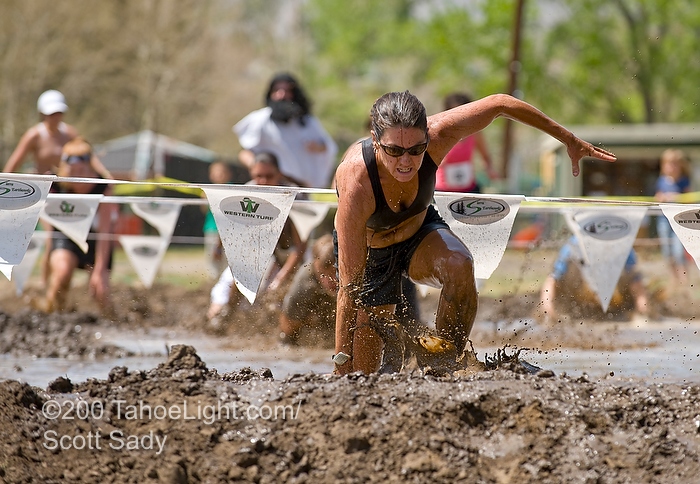
Remember, we comment on your posts by Sunday, sometimes earlier. If you posted too late on an assignment the week before to receive comments before the last class, please don't feel the need to wait for us to leave comments before you get started on your next assignment. Or, if you do feel that you can't proceed any further without feedback, email one or both of us with your query. Or, post about your situation at the moment. We'll come back around to help you out of the mud.
All told, at least nine of the twelve enrolled students now has a blog up with at least one assignment posted and at least one set of comments and responses to go with it. One of you has a blog with no posts as yet, one of you has yet to start a blog, and one has yet to accept the invitation to be a contributor. If you are one of these three folks and reading this, try to get some kind of a post up soon, so that we know you're still with us.
Now the real digging-in begins. This is the fun part of the thesis challenge. It's hard work, messy, and satisfying if you really throw yourself into it.
Remember, we comment on your posts by Sunday, sometimes earlier. If you posted too late on an assignment the week before to receive comments before the last class, please don't feel the need to wait for us to leave comments before you get started on your next assignment. Or, if you do feel that you can't proceed any further without feedback, email one or both of us with your query. Or, post about your situation at the moment. We'll come back around to help you out of the mud.
All told, at least nine of the twelve enrolled students now has a blog up with at least one assignment posted and at least one set of comments and responses to go with it. One of you has a blog with no posts as yet, one of you has yet to start a blog, and one has yet to accept the invitation to be a contributor. If you are one of these three folks and reading this, try to get some kind of a post up soon, so that we know you're still with us.
Now the real digging-in begins. This is the fun part of the thesis challenge. It's hard work, messy, and satisfying if you really throw yourself into it.
Tuesday, January 24, 2012
A Couple of Items Mentioned in Class Yesterday
I told you about a new interactive tutorial that the UVU library has made. It's still in beta version with a couple of minor bugs, and it was originally designed for use in Psych 1010 courses, so the content examples are from psychology, but it's applicable to general research and may prove helpful to you as you familiarize yourself with how much your access to the UVU library can help your project. Here's the url:
www.uvu.edu/library/tutorials/psy1010/
Also, we brought up John Goshert's research writing handbook, Entering the Academic Conversation. You may want to check it out. It's a good guidebook; you may also know Prof. Goshert as one of our UVU English faculty. He's an accessible person, so if you're using his book as a reference while working on your capstone thesis project and you come with a writing question, you can look him up personally for a little feedback.
www.uvu.edu/library/tutorials/psy1010/
Also, we brought up John Goshert's research writing handbook, Entering the Academic Conversation. You may want to check it out. It's a good guidebook; you may also know Prof. Goshert as one of our UVU English faculty. He's an accessible person, so if you're using his book as a reference while working on your capstone thesis project and you come with a writing question, you can look him up personally for a little feedback.
Sunday, January 22, 2012
The Beginning of a Thesis
It's now nearing noon on Sunday. Last I checked, all but three of you have accepted your invitations to the blog and can now be contributors. Only four students so far--Ryan, Robin, Brenda, and Holly--have posted their assignments as initial entries on their own capstone blogs. I have added all four of their blogs to the "My Blog List," where they join the blogs from the previous Capstone One students. I've also written initial comments for each.
If you haven't started up your blog yet and still have to post your first assignment, go ahead and do so. If Prof. Foster or I do not get a chance to read it before class tomorrow afternoon, it's still a benefit to have it up. Schedule permitting, we may yet be able to read and comment on it.
If you haven't started working on the assignment at all and are uncertain as to how to answer the questions itemized in the instructions (see syllabus, 7 Jan 12 entry, below), it may help you to review the four postings already up, as well as any comments made to them. We encourage you to comment yourself as well.
(A tip: you can always spot the newest entries simply by looking at each blog in the "My Blogs List": under each link there is the information that the latest post was made x hours/days/weeks/months ago. You should check out all the entries for the past week.)
See you in class tomorrow. Hope to spot your first thesis assignment here before then.
If you haven't started up your blog yet and still have to post your first assignment, go ahead and do so. If Prof. Foster or I do not get a chance to read it before class tomorrow afternoon, it's still a benefit to have it up. Schedule permitting, we may yet be able to read and comment on it.
If you haven't started working on the assignment at all and are uncertain as to how to answer the questions itemized in the instructions (see syllabus, 7 Jan 12 entry, below), it may help you to review the four postings already up, as well as any comments made to them. We encourage you to comment yourself as well.
(A tip: you can always spot the newest entries simply by looking at each blog in the "My Blogs List": under each link there is the information that the latest post was made x hours/days/weeks/months ago. You should check out all the entries for the past week.)
See you in class tomorrow. Hope to spot your first thesis assignment here before then.
Subscribe to:
Posts (Atom)